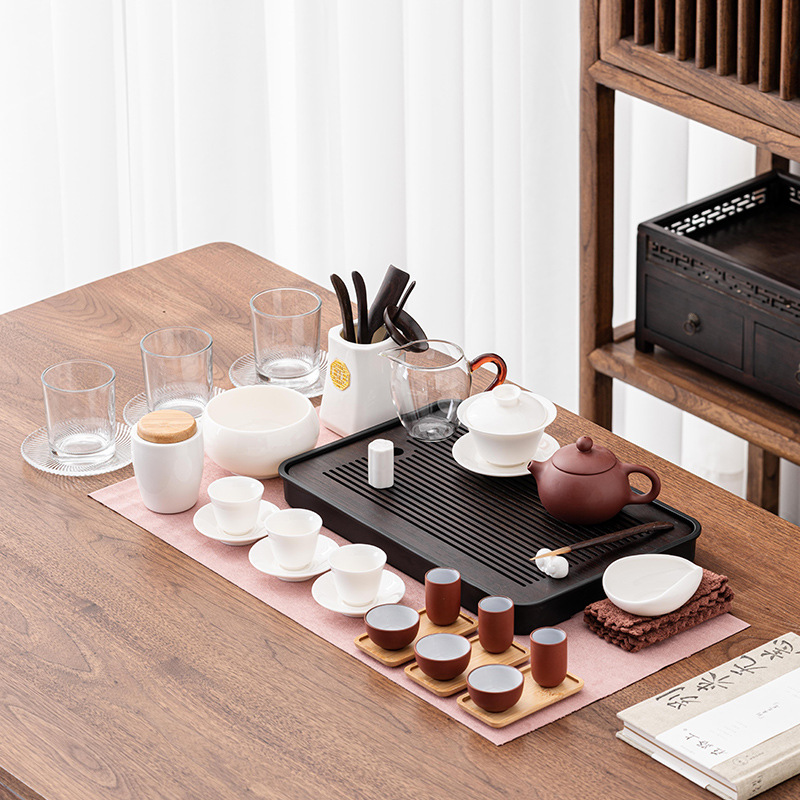
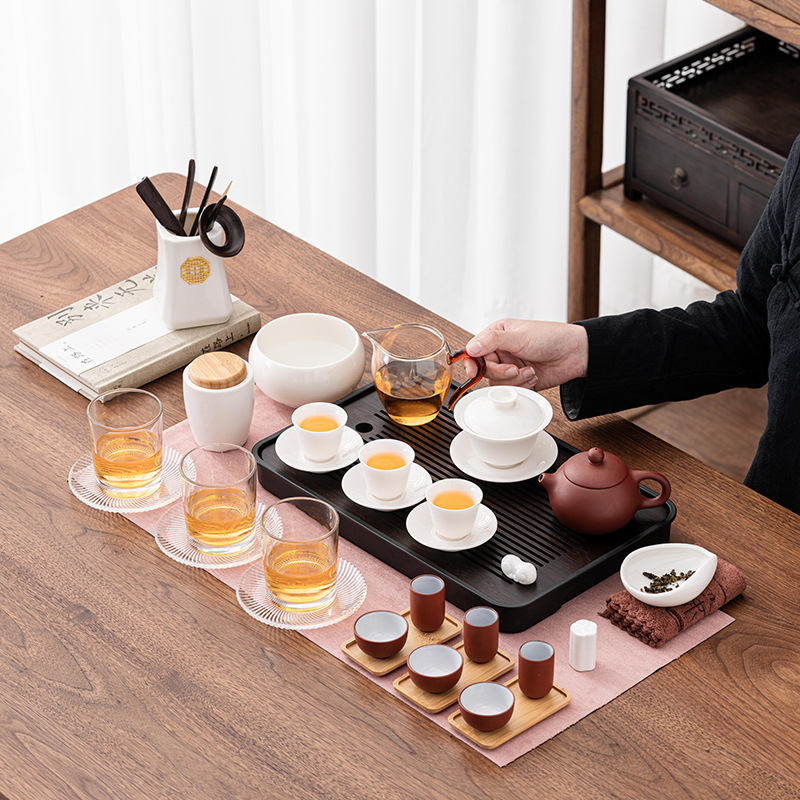
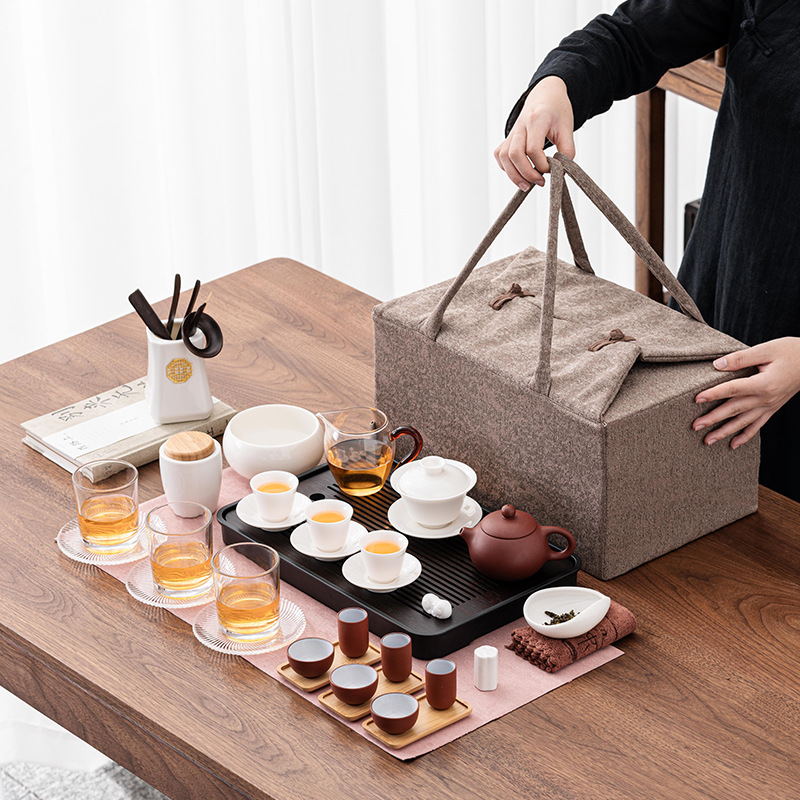
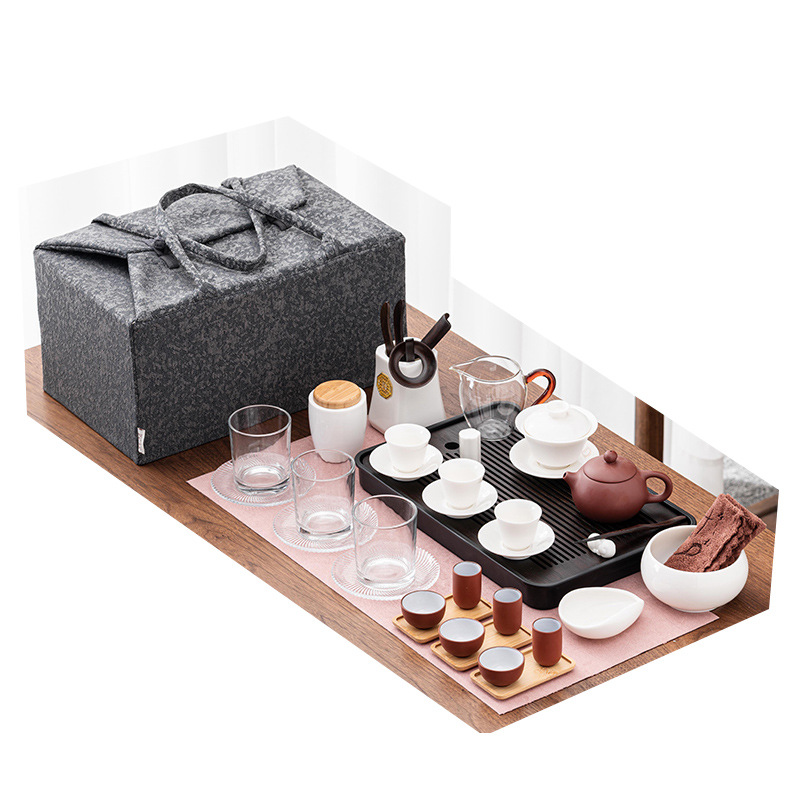
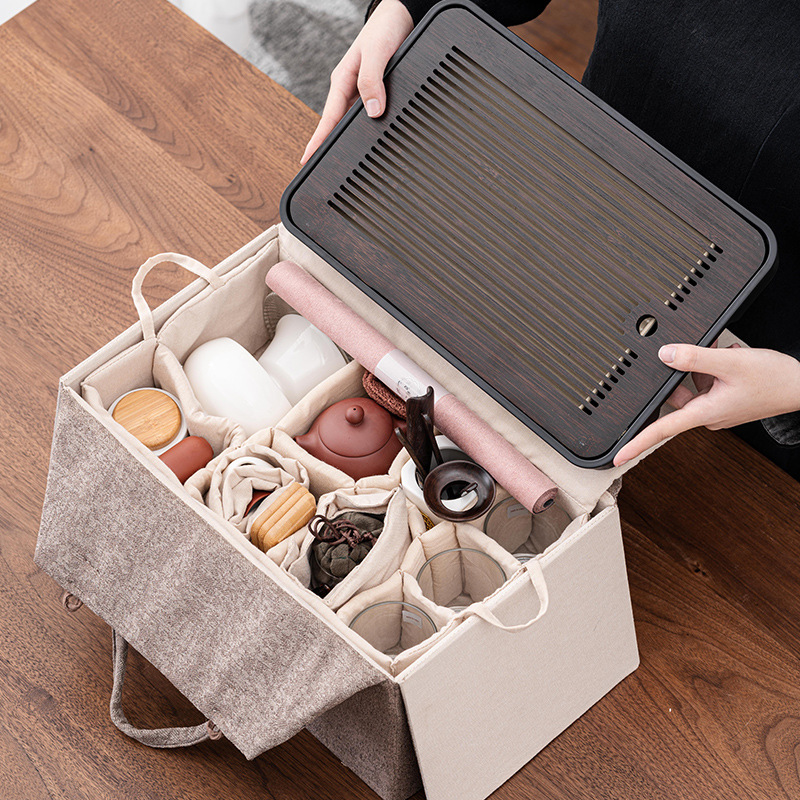
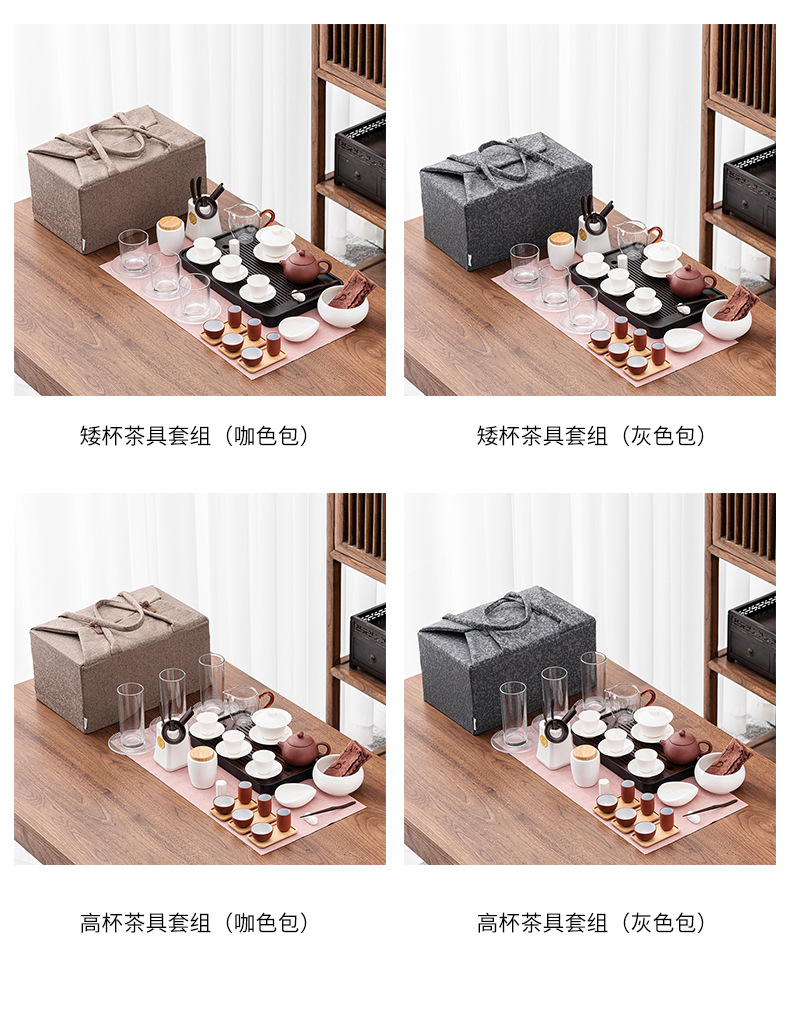
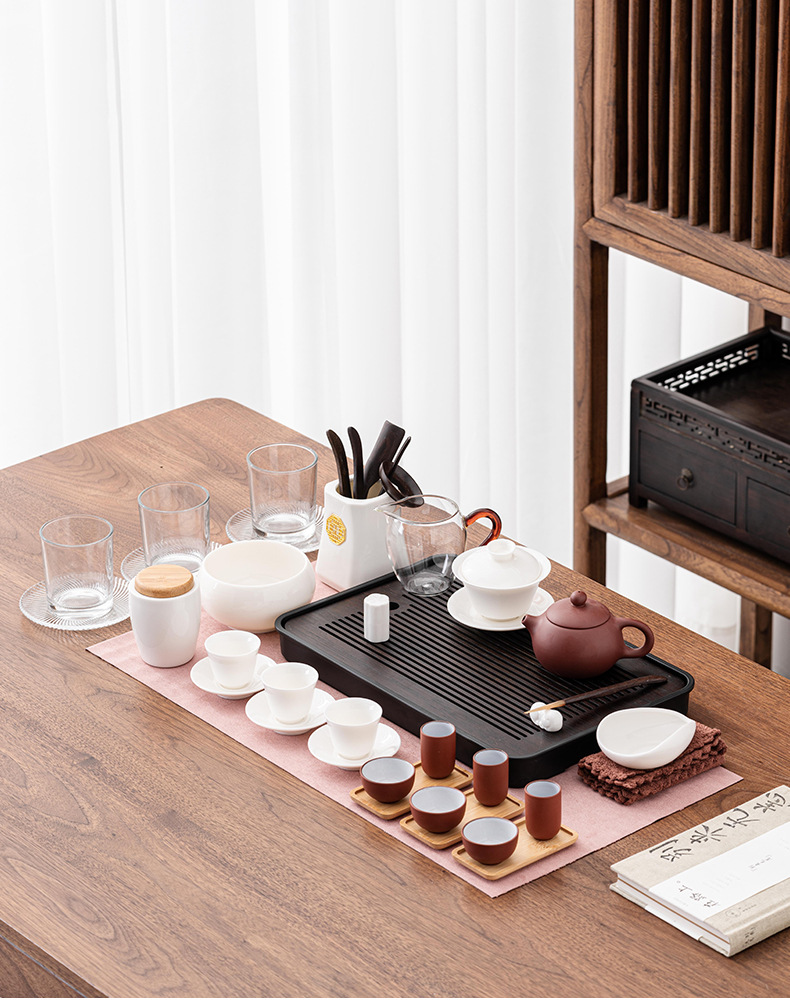
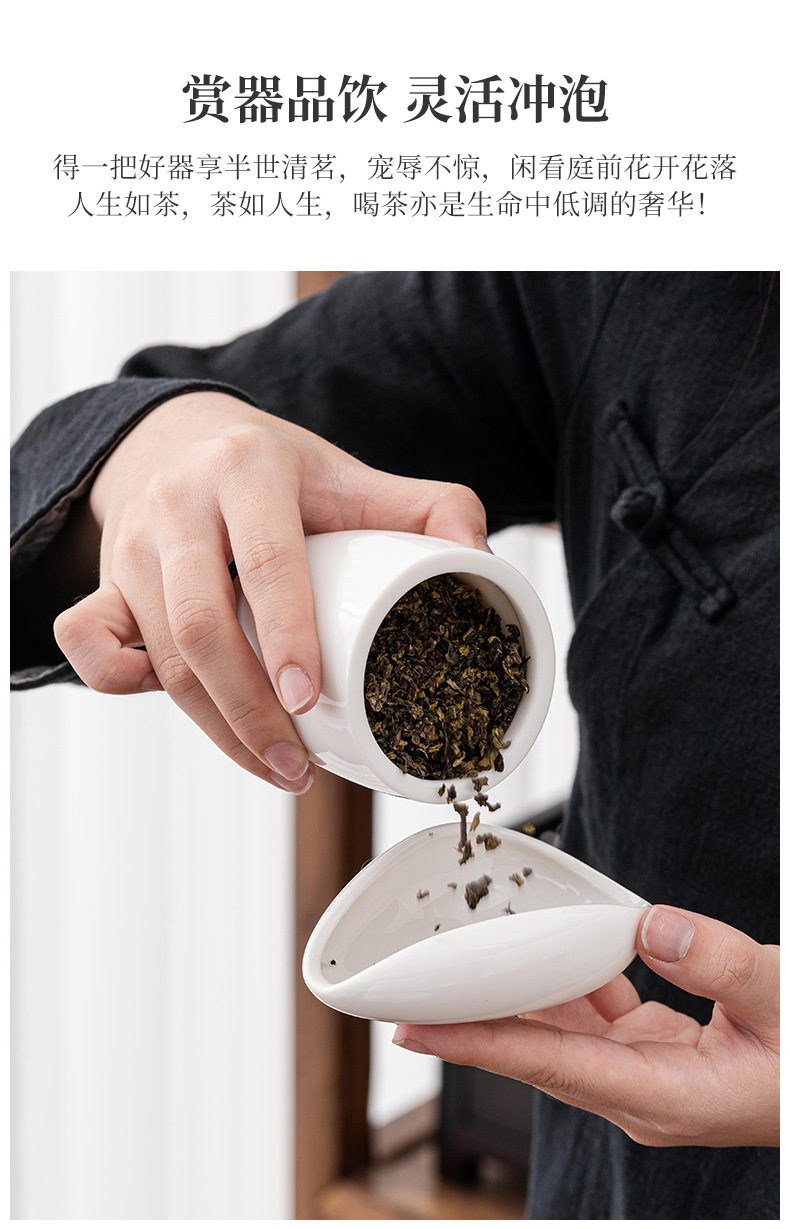
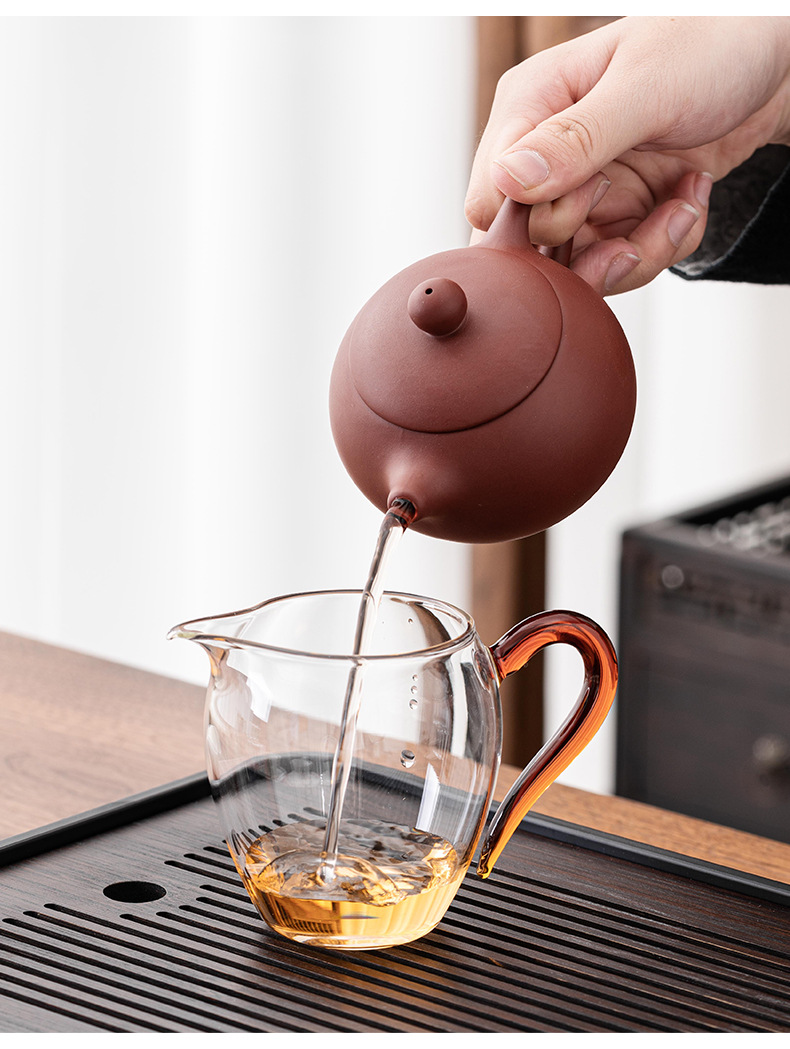
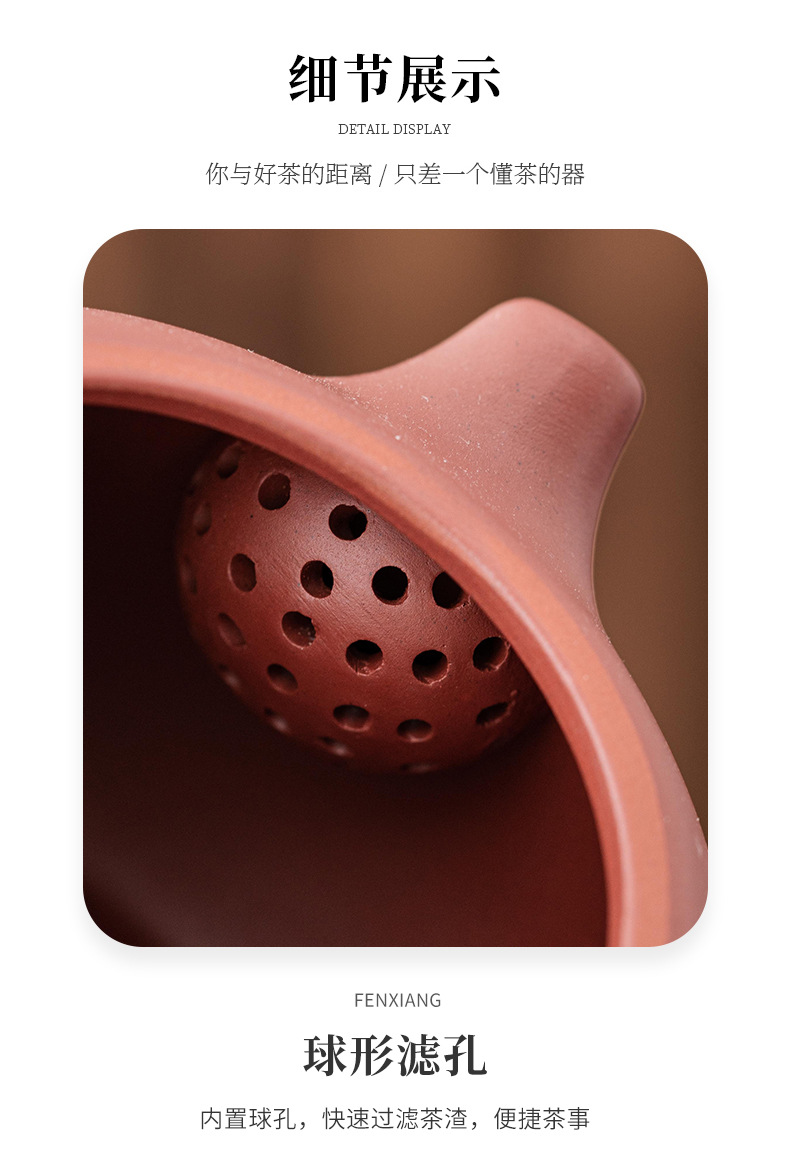
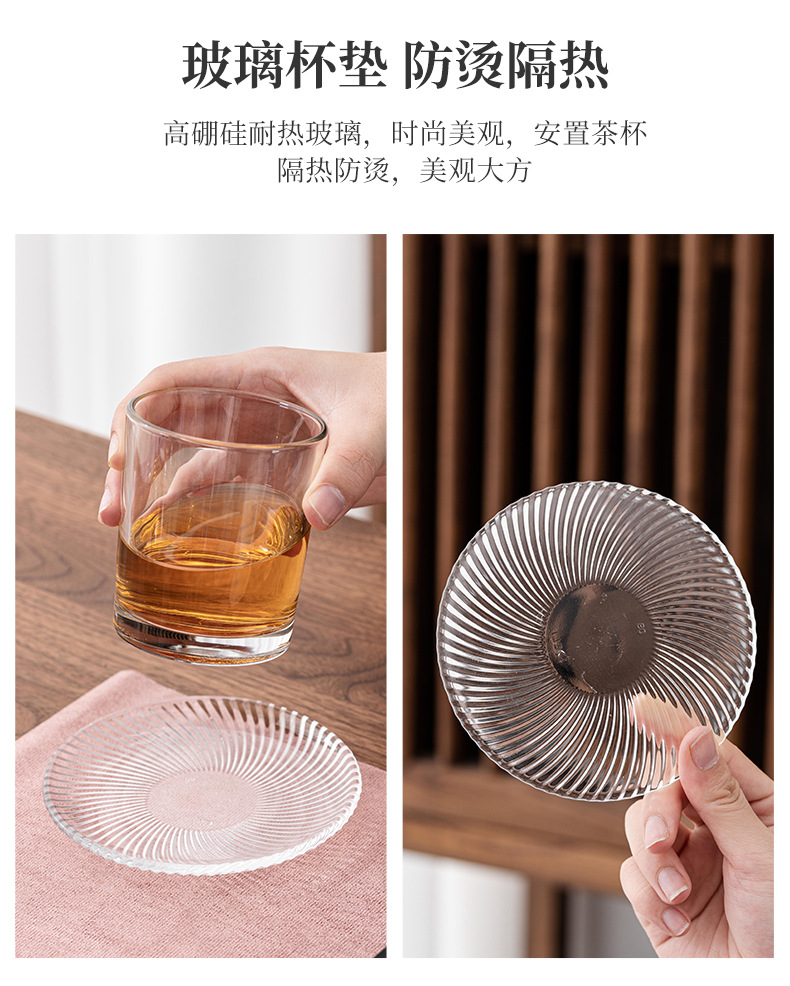
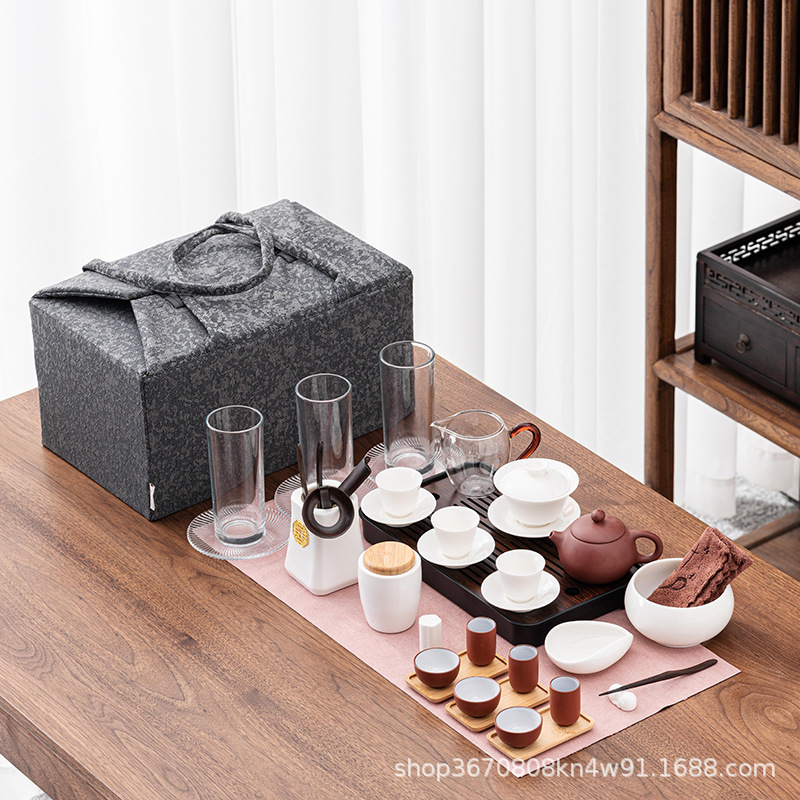
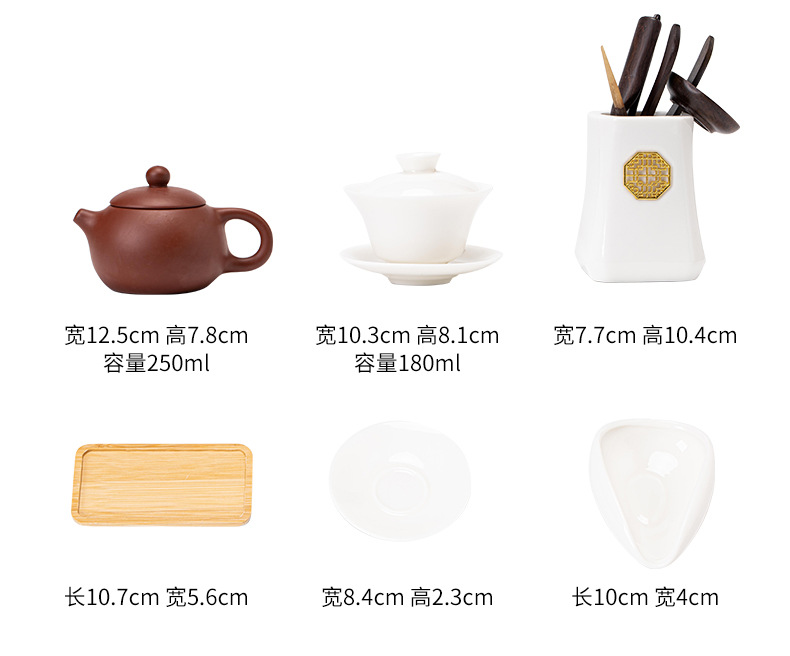
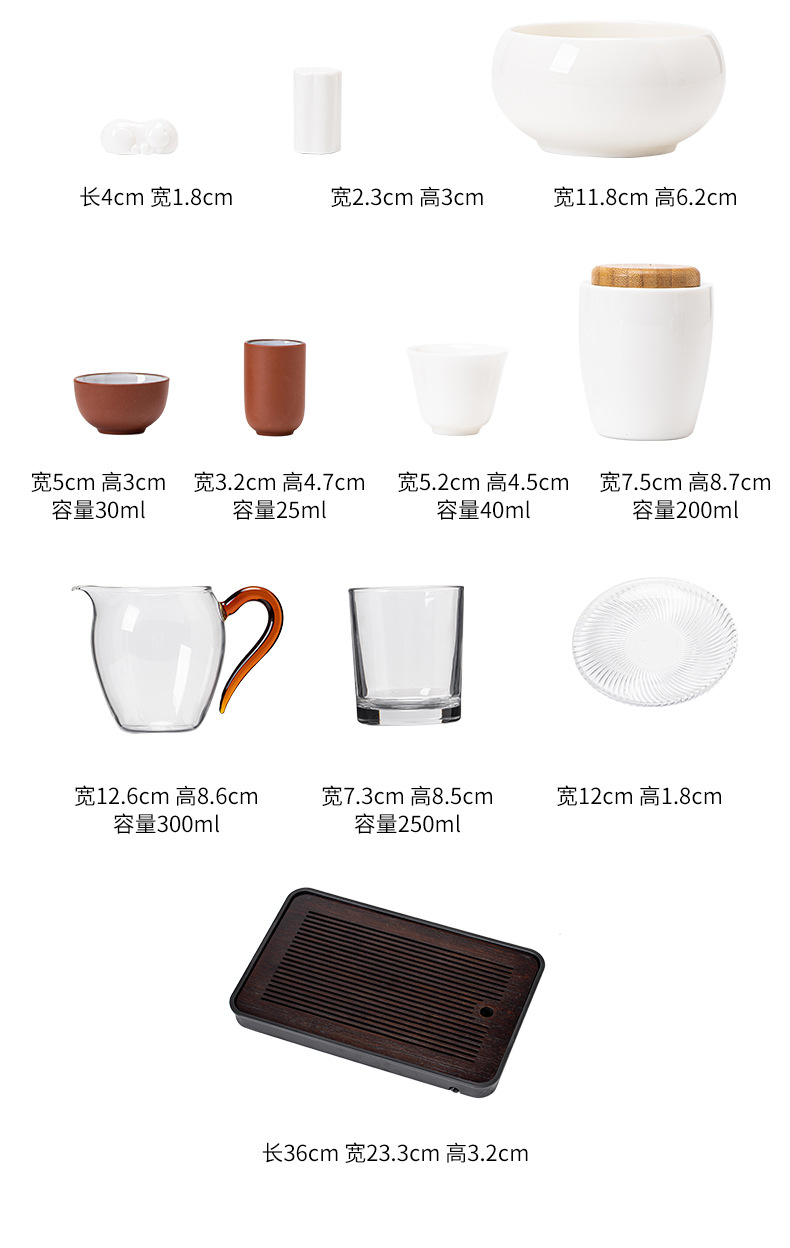
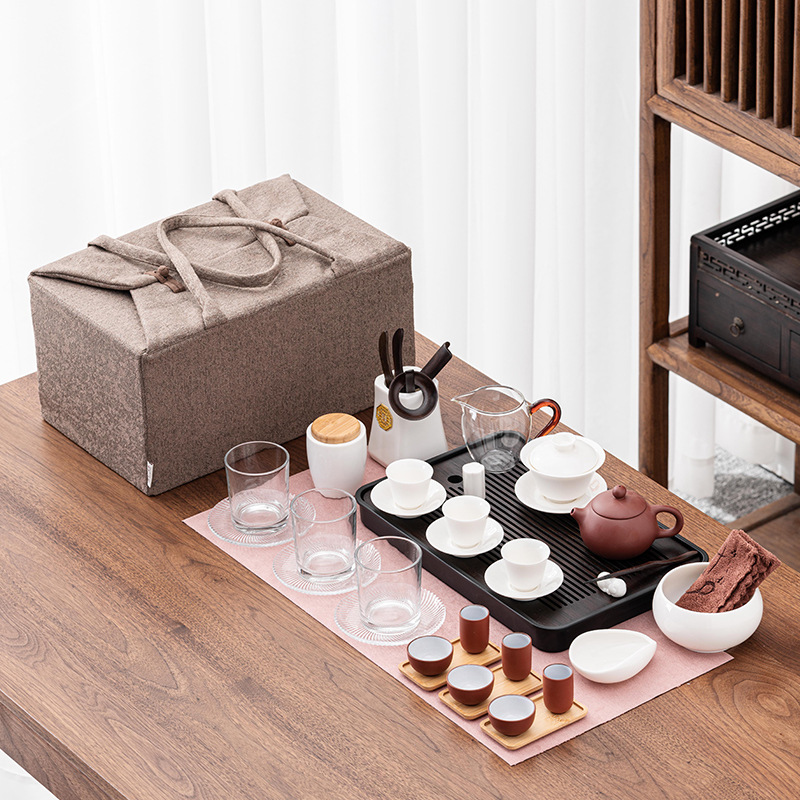
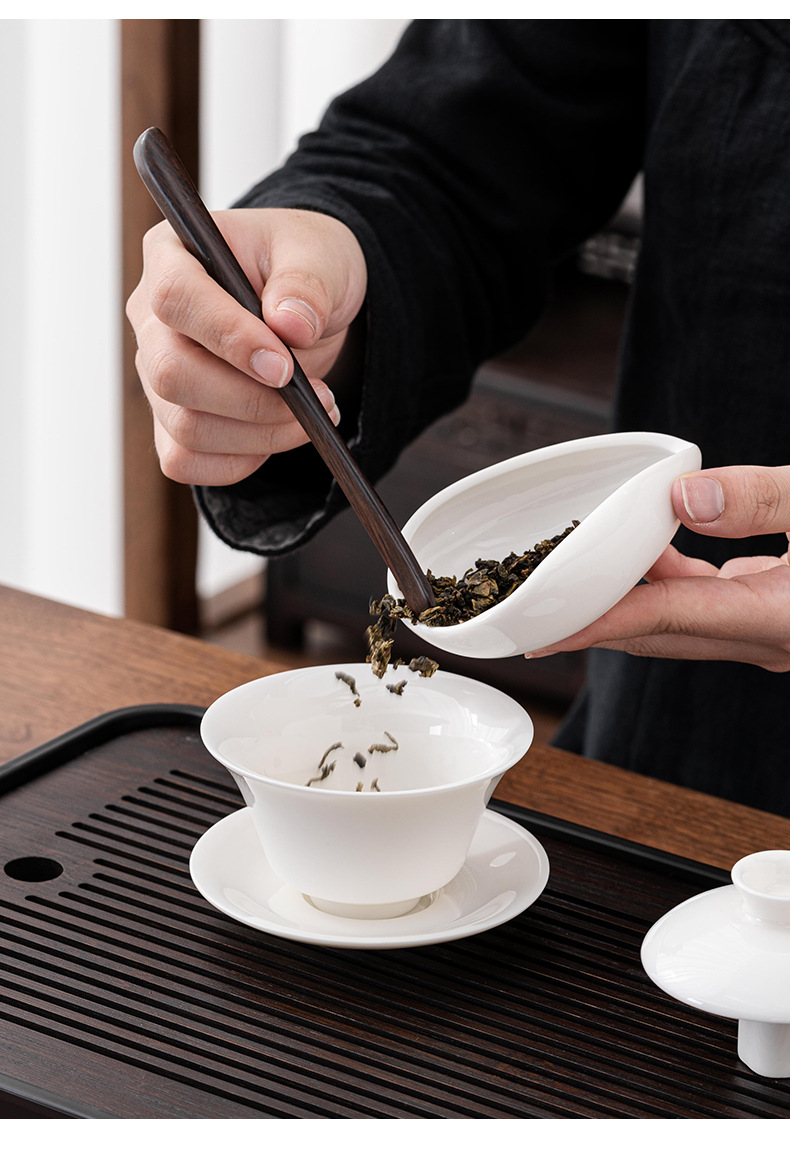
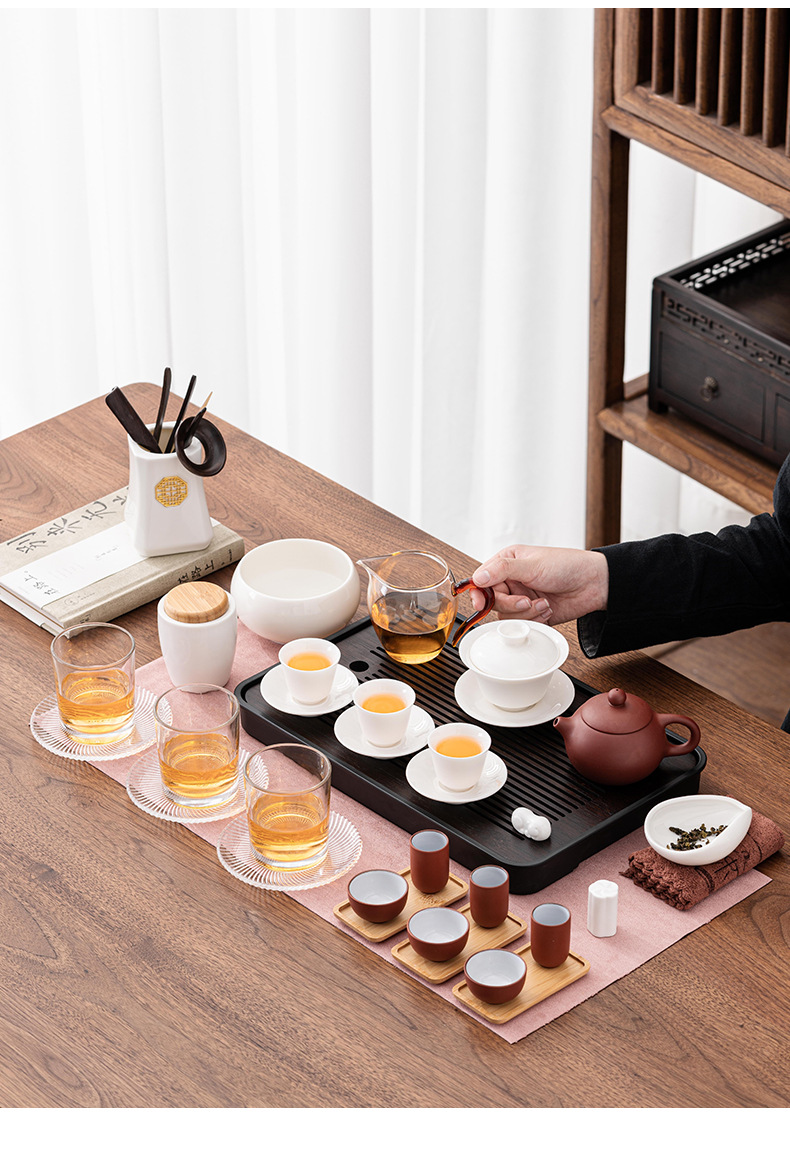
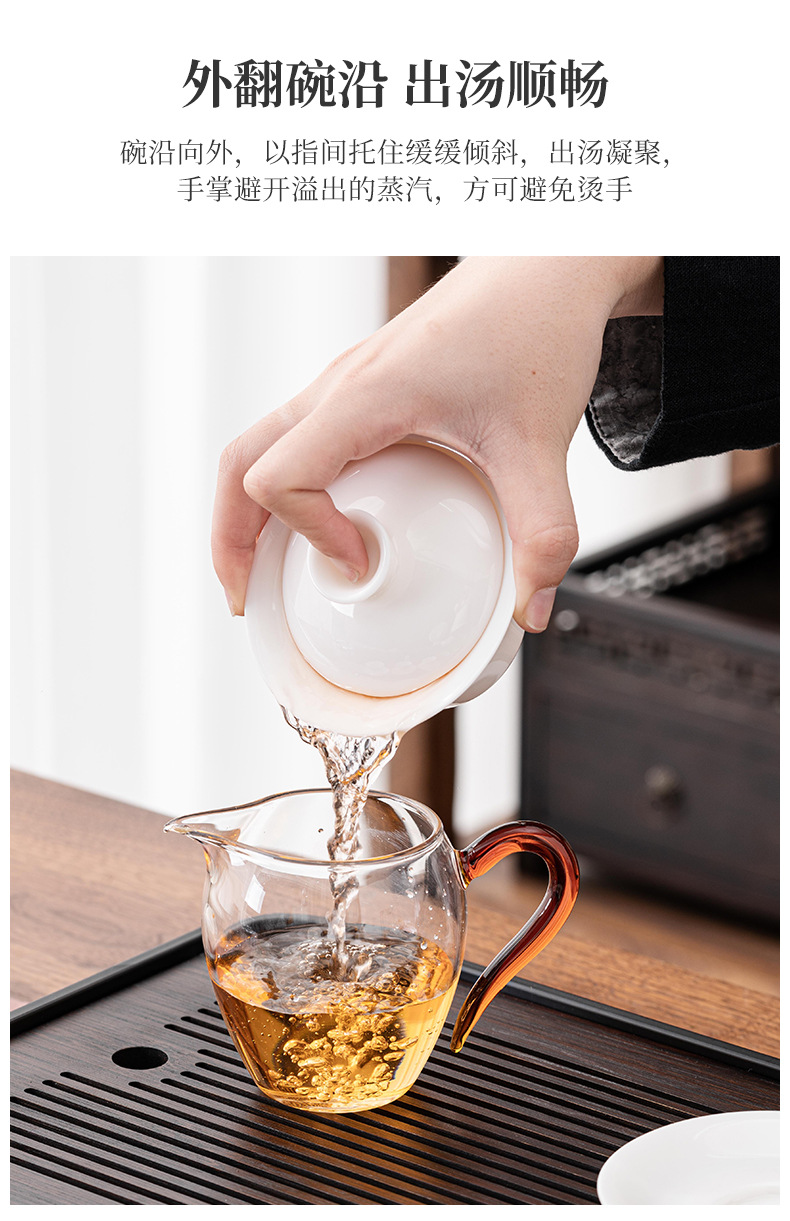
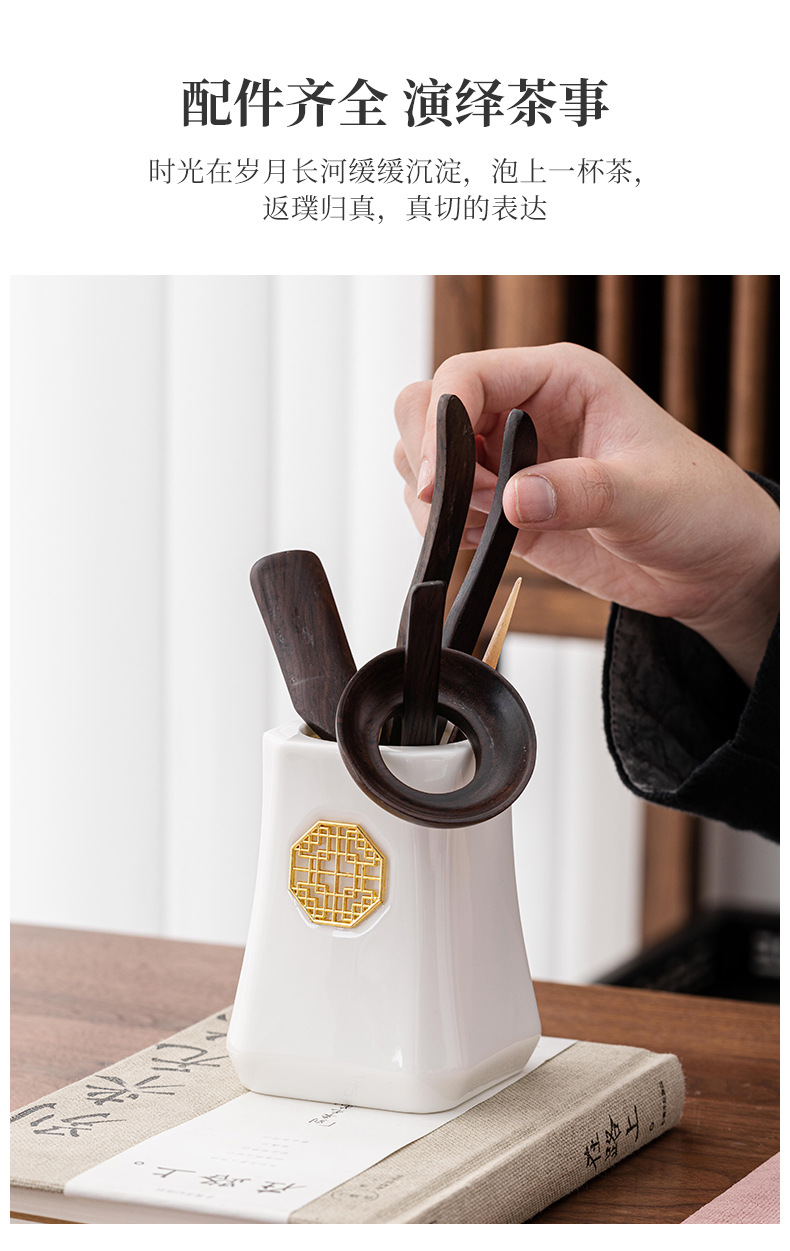
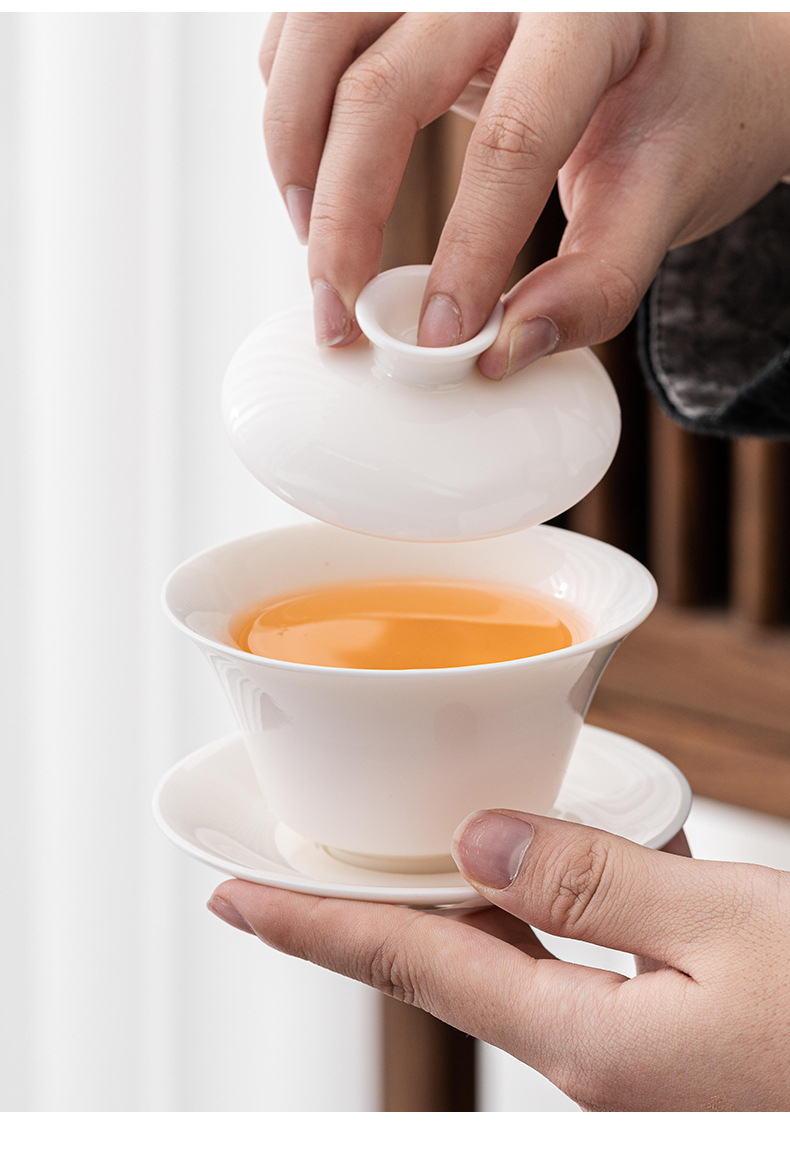
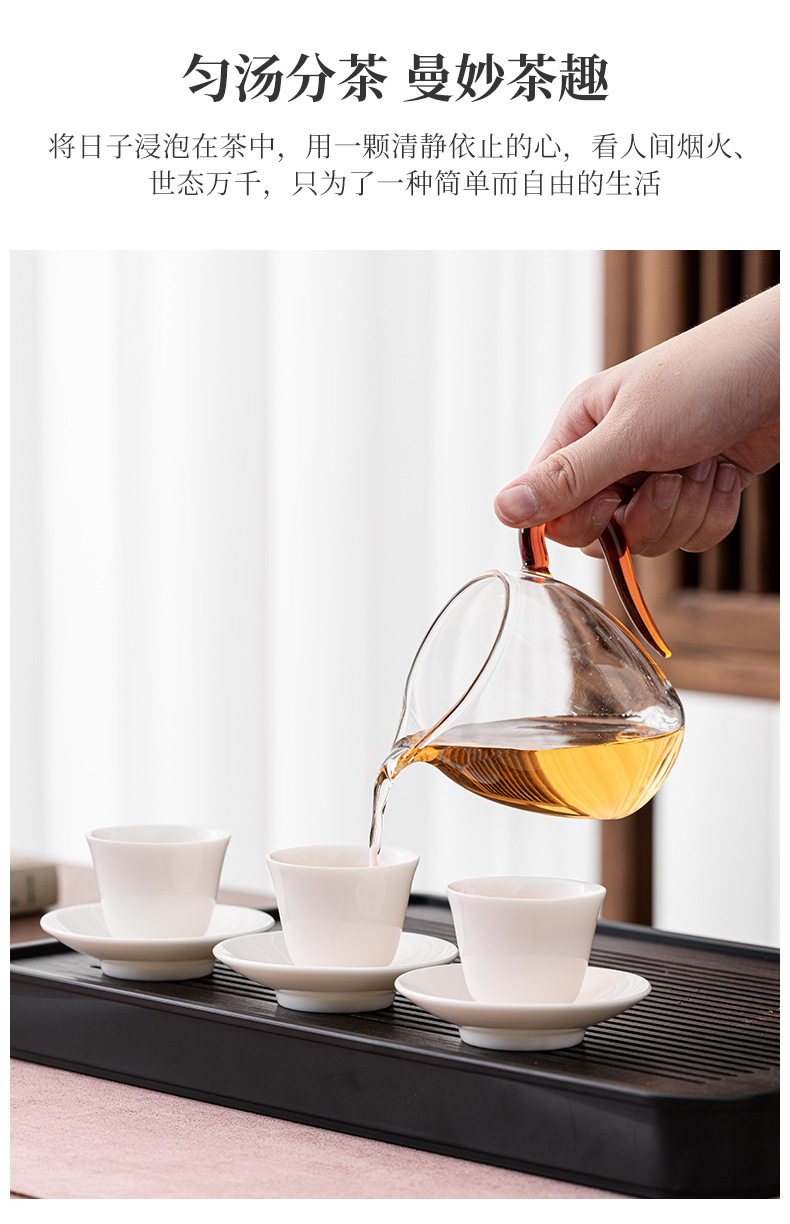
Complete portable tea art set
Chinese tea, tea culture, tea table
Chinese tea ware refers to a general term for the utensils used for tea drinking, primarily made of materials such as pottery, porcelain, lacquerware, bamboo, and wood. It combines practical functionality with artistic appeal, and its development is closely related to the evolution of Chinese tea-drinking customs.
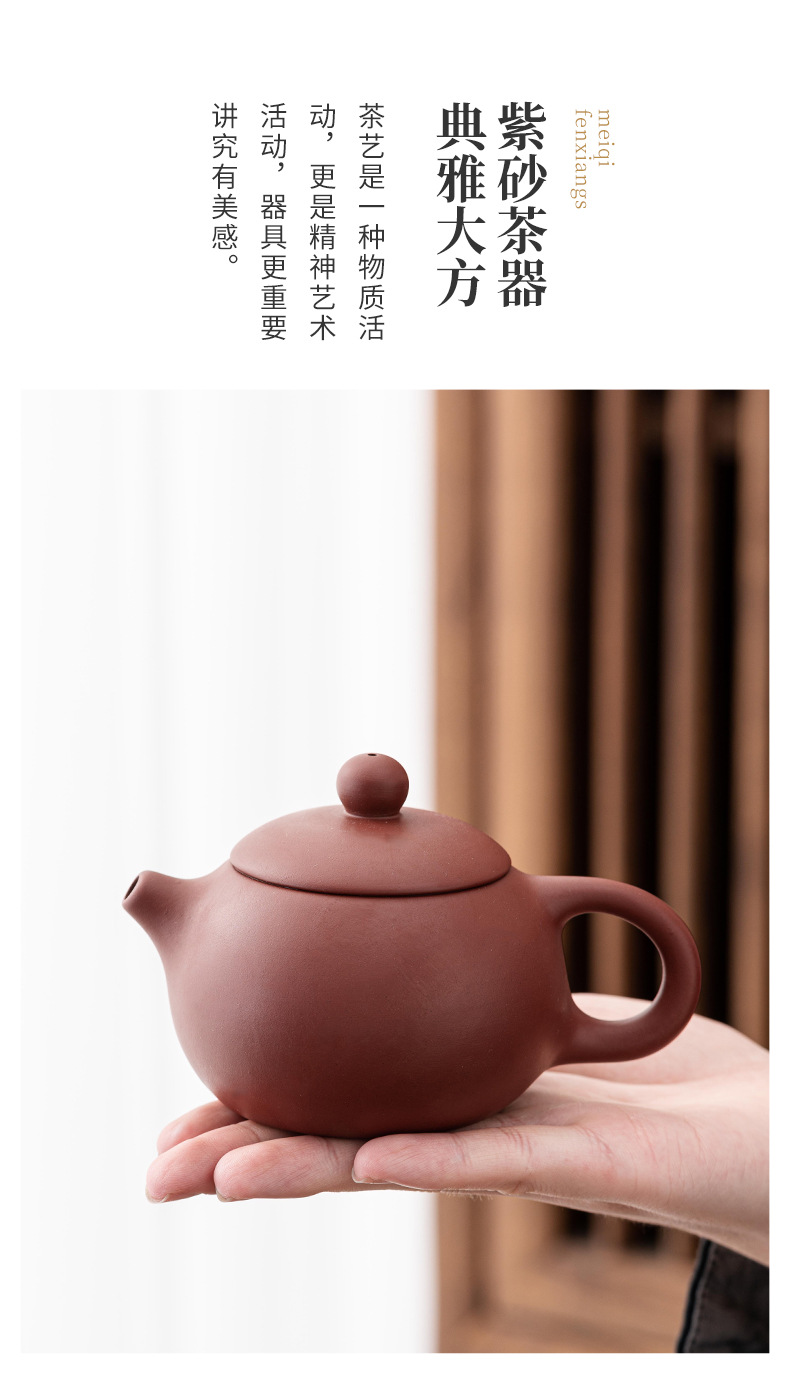
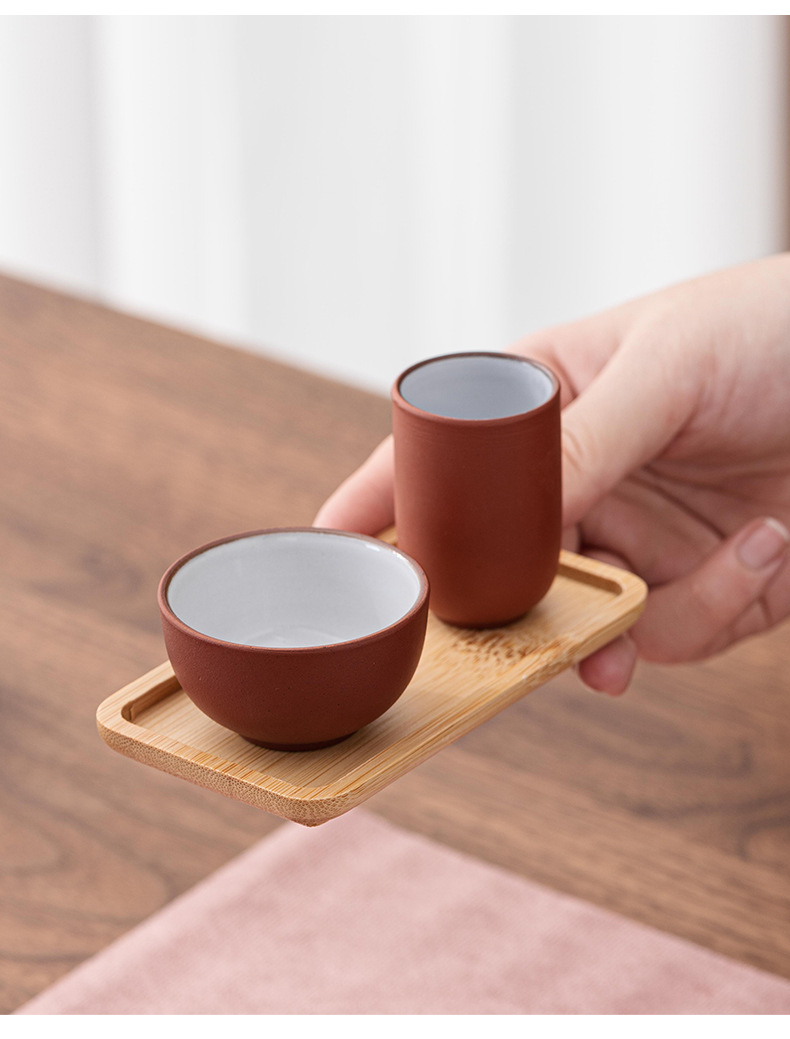
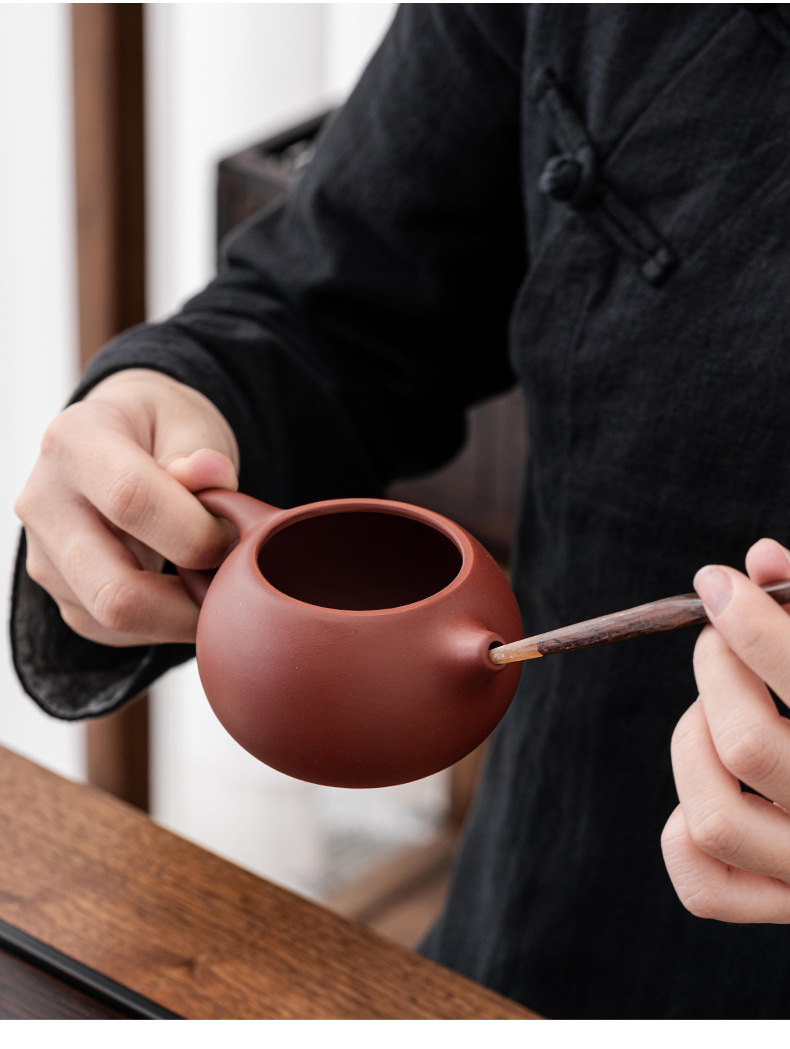
In the early days, tea sets were primarily made of pottery, which were later gradually replaced by porcelain. During the Tang Dynasty, white porcelain from the Xing Kiln was widely used. In the Song Dynasty, Longquan celadon and Jian ware black porcelain became popular due to the demands of tea art and tea competition respectively. In the Yuan Dynasty, Jingdezhen blue and white porcelain emerged, and during the Ming and Qing Dynasties, it became mainstream, with craftsmanship reaching its peak. Pottery tea sets are represented by Yixing purple sand, which originated in the Northern Song Dynasty. In the Ming Dynasty, the participation of literati enhanced its artistic value, and in the Qing Dynasty, it incorporated techniques such as enamel painting. Lacquer tea sets were renowned for Fuzhou bodiless lacquerware in the Qing Dynasty, while bamboo tea sets emphasized the combination of craftsmanship and practicality. Early metal tea sets were mostly made of gold and silver, and later were often used as tea storage containers. Modern tea sets incorporate materials such as glass and stone tea trays, emphasizing the integration of function and aesthetics.
In the early days, tea sets were primarily made of pottery, which were later gradually replaced by porcelain. During the Tang Dynasty, white porcelain from the Xing Kiln was widely used. In the Song Dynasty, Longquan celadon and Jian ware black porcelain became popular due to the demands of tea art and tea competition respectively. In the Yuan Dynasty, Jingdezhen blue and white porcelain emerged, and during the Ming and Qing Dynasties, it became mainstream, with craftsmanship reaching its peak. Pottery tea sets are represented by Yixing purple sand, which originated in the Northern Song Dynasty. In the Ming Dynasty, the participation of literati enhanced its artistic value, and in the Qing Dynasty, it incorporated techniques such as enamel painting. Lacquer tea sets were renowned for Fuzhou bodiless lacquerware in the Qing Dynasty, while bamboo tea sets emphasized the combination of craftsmanship and practicality. Early metal tea sets were mostly made of gold and silver, and later were often used as tea storage containers. Modern tea sets incorporate materials such as glass and stone tea trays, emphasizing the integration of function and aesthetics.